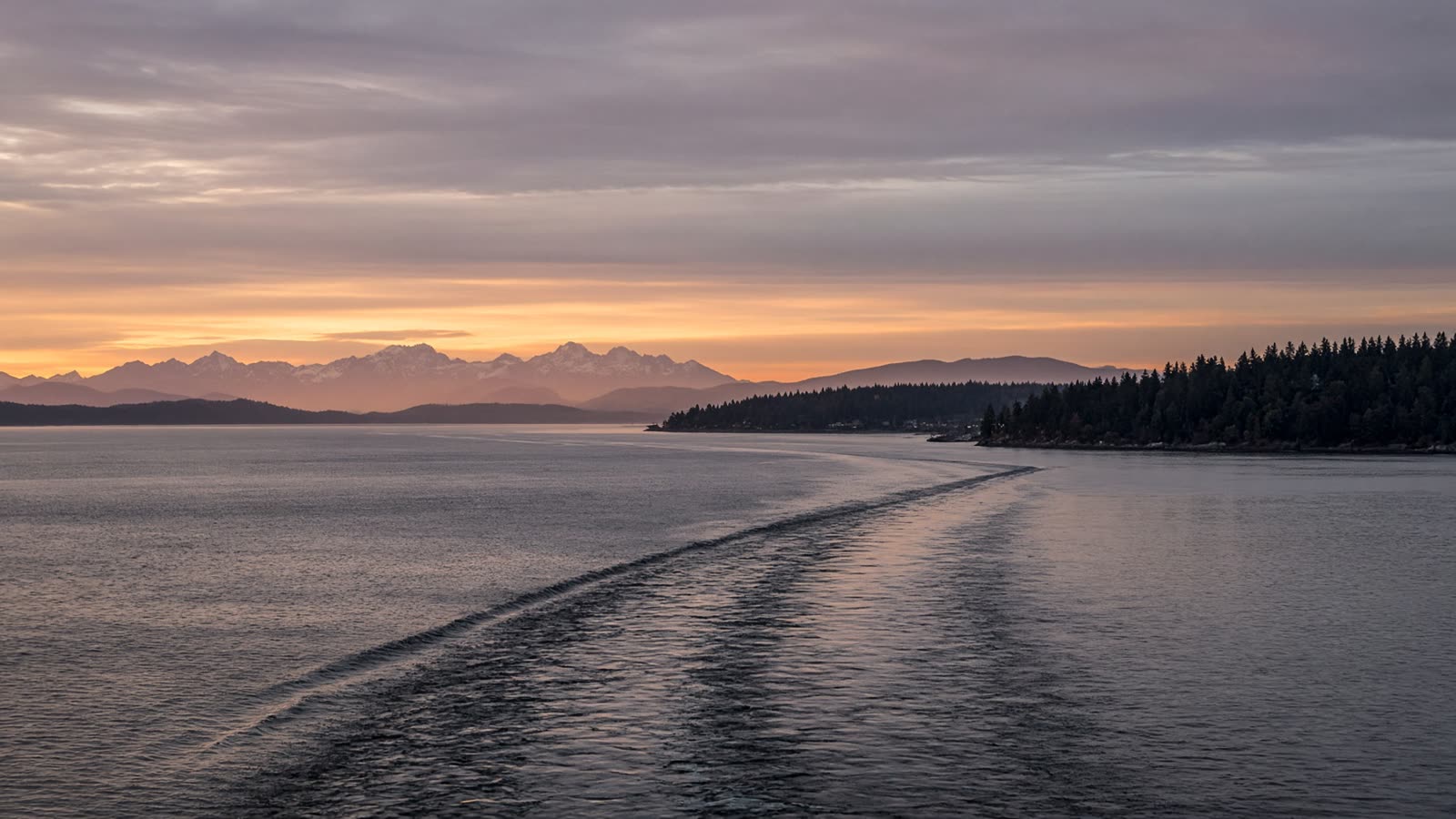
There is a moment, just after the boat clears the dock, when the city becomes a model of itself. Windows flatten into a single warm band. The cranes on Harbor Island look like toys someone forgot to put away. You stand at the rail because that is what people do, and because the wind is the first honest thing that has happened all day.
The Sound at that hour is not blue. It is pewter, then nickel, then something closer to the inside of a mussel shell. The Olympics take the last light and hold it the way a hand holds a match: carefully, as if the mountain range itself might go out.
I have taken this ferry enough times to know the schedule and never the weather. That seems correct. A place this wet should be allowed to change its mind.
What the water keeps
People talk about the Northwest as if it were a mood — gray, caffeinated, a little proud of its moss. Standing on the water you understand it is also a set of distances. Islands arrive slowly. The far shore is always farther than it looks. You can watch a freighter for twenty minutes and still not decide whether it is coming or going.
A man beside me photographed the wake and then, as if embarrassed, photographed nothing else. The wake is the only part of a crossing that belongs exclusively to you. It erases itself. That is its charm.
The last light does not fall here so much as it withdraws, taking the names of things with it.
By the time we reached the other side the hills had gone the color of steeped tea. Someone folded a newspaper they had not been reading. The ramp came down with a sound like a thought finishing.
I walked off into a town that smelled of tide and diesel and fried fish, which is to say it smelled like itself. Behind us the Sound kept the light a little longer, the way some people keep a letter after they have already learned what it says.