A walk with a destination is an errand. A walk without one is a method. You put the body in motion so the mind will stop performing and start associating, which is its more useful job.
I do not use headphones. This is not a moral position. It is a practical one. The street is already talking. A bus sighs. A dog decides something. Two people disagree about a restaurant in a way that suggests the restaurant will be fine and the friendship might not. All of this is research.
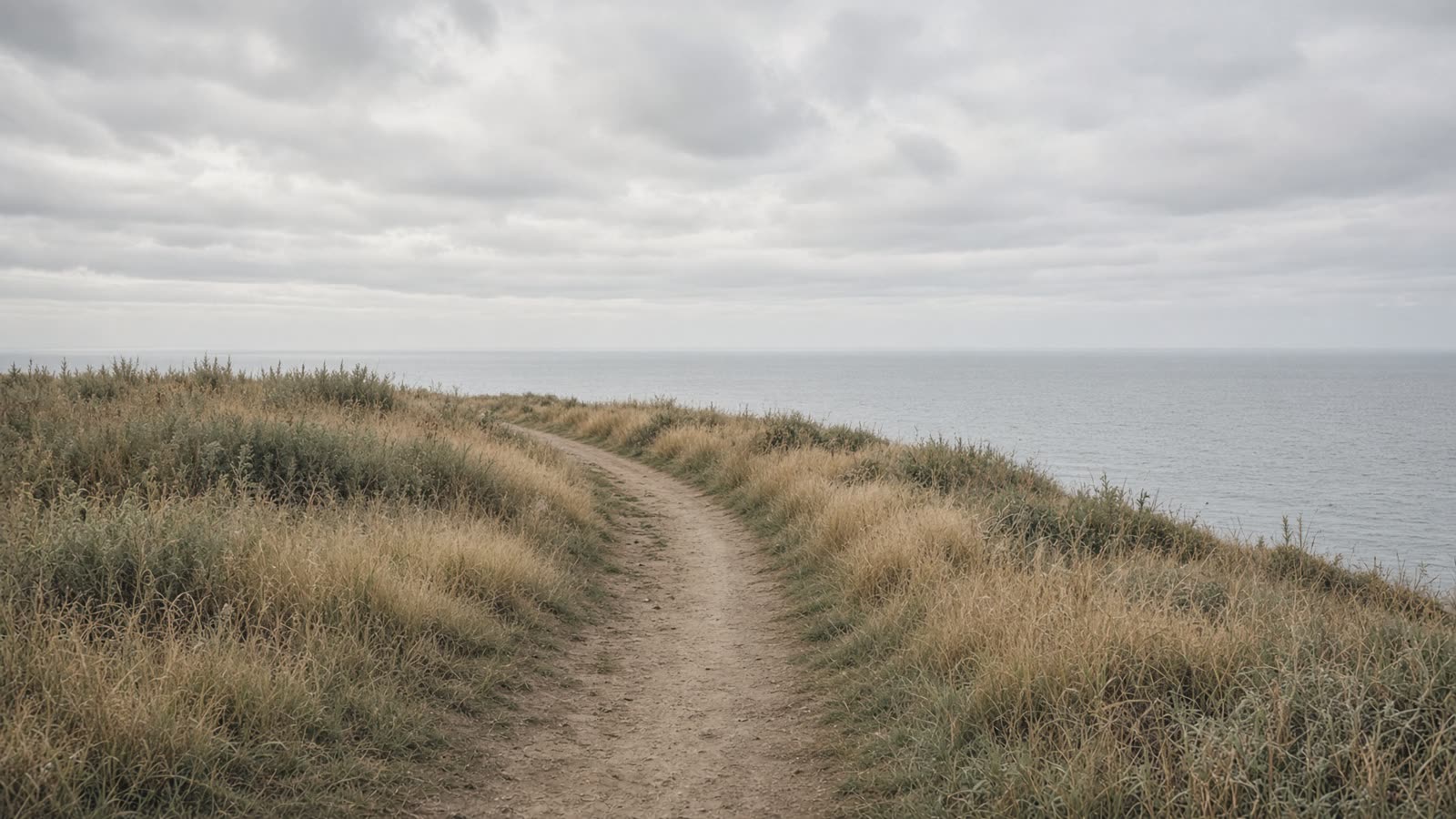
The coastal path near me is almost always empty in the late afternoon, which is either a gift or a warning about the weather. The grasses go the color of paper bags. The water is a line, not a destination. You can walk until your thoughts become as repetitive as the fence posts and then, without trying, one of them is new.
How to get lost correctly
Do not consult the phone. Do not make the walk about steps. If you must have a rule, turn left the third time you are bored.
Getting lost in a city is harder than it used to be, which is a shame. Getting lost on a path is still possible if you stop treating the path as a corridor and start treating it as a sentence you can leave.
I have solved almost nothing this way. I have, however, arrived home with a problem that is a better shape than the one I left with. That is as close to thinking as I reliably get.
The last stretch is always the same: the smell of someone else's dinner, the particular gray of the hour, the small relief of knowing the door. You take the key out earlier than you need to. The walk is over. The day can continue, slightly altered, which is all you asked of it.